

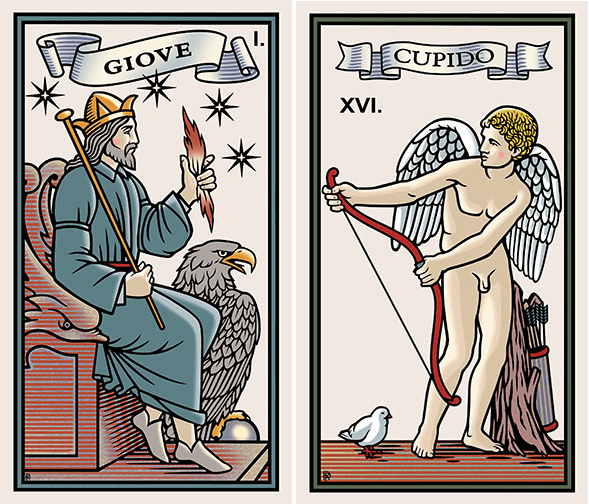
The Tarot evolved over the 15th century and came to embody the final twenty-one trumps in the last half of the century. The oldest known version is described in a letter Jacopo Antonio Marcello wrote in 1449 to Queen Isabelle of Lorraine, in his capacity as her agent. The letter describes two decks that Marcello was acquiring for the queen that were originally created for Filippo Maria Visconti, Duke of Milan (1392- 1447). Of the two decks, the older one was created between 1412 and 1425. It was based on a plan created by Marziano da Tortona (1370-1423/1425), the Duke’s secretary, tutor, and astrologer. This deck has sixteen trumps that were all Classical gods, from Jupiter to Cupid.
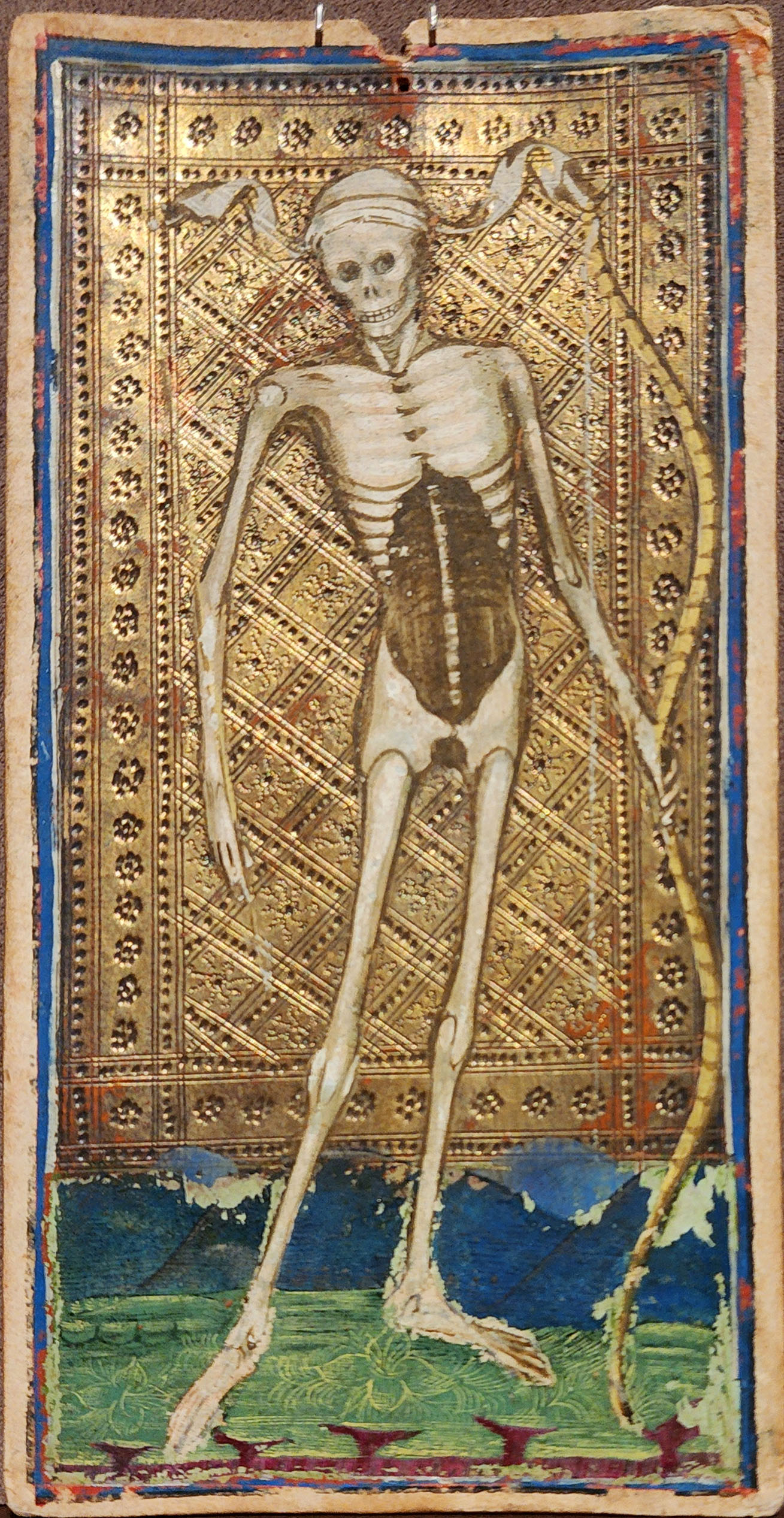
The oldest existing Tarot decks are fifteen fragmented decks that were hand painted for the dukes of Milan. The oldest is the Brambilla Tarot created for Filippo Maria Visconti in c.1444. It has two existing trumps: the Emperor and the Wheel of Fortune. The Cary-Yale Visconti created for the duke sometime before his death in 1447 has eleven remaining trumps: The Emperor and Empress, the Lovers, the Chariot, Faith, Hope and Charity, Strength, Death, Judgment, and the World. Note that this deck is the only Tarot to depict the three Christian virtues (although we do find the three Christian virtues in the Florentine Minchiate), and that the World card depicts a scene from the Grail legend with the hero approaching the Grail Castle.
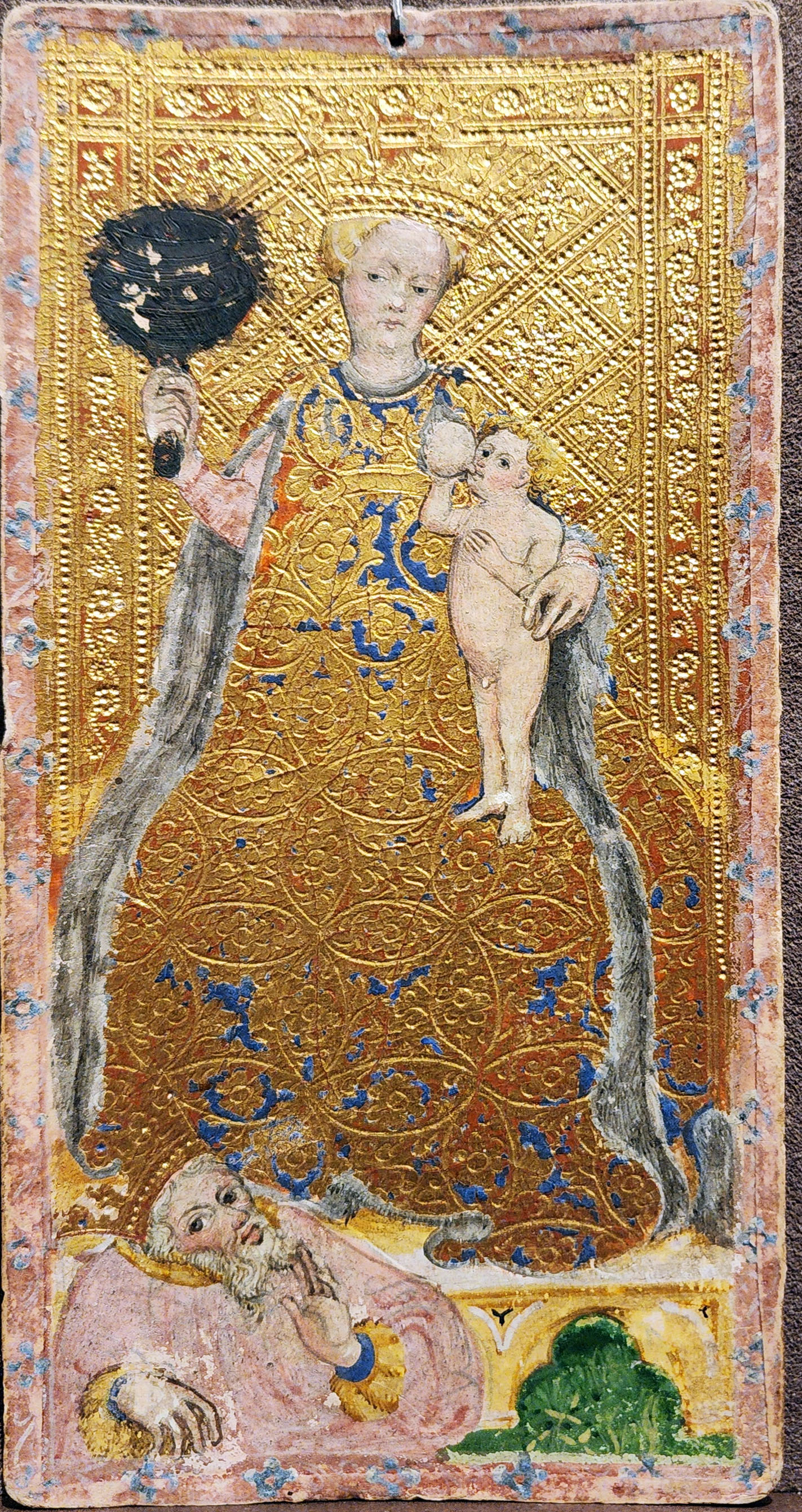
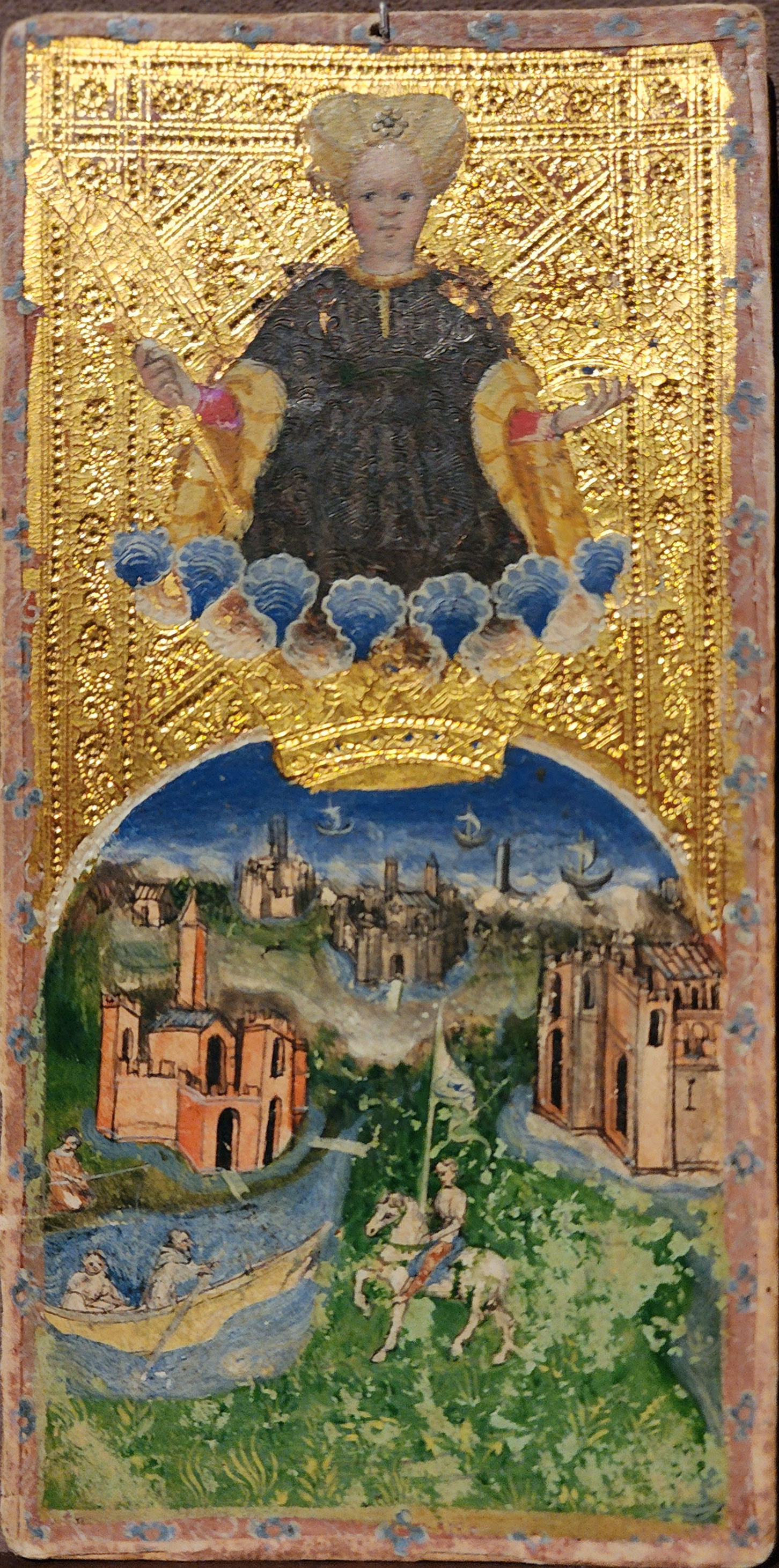
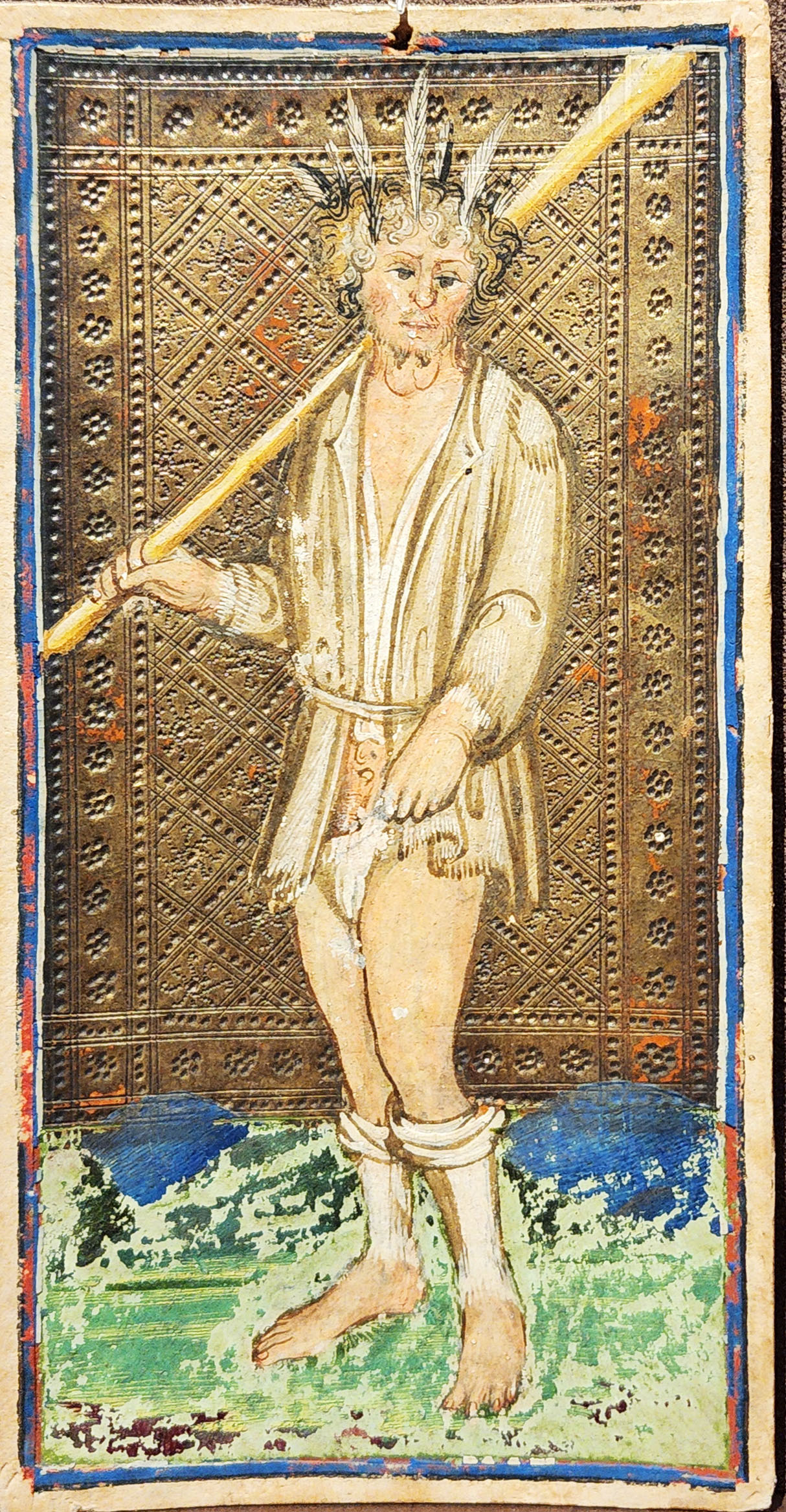
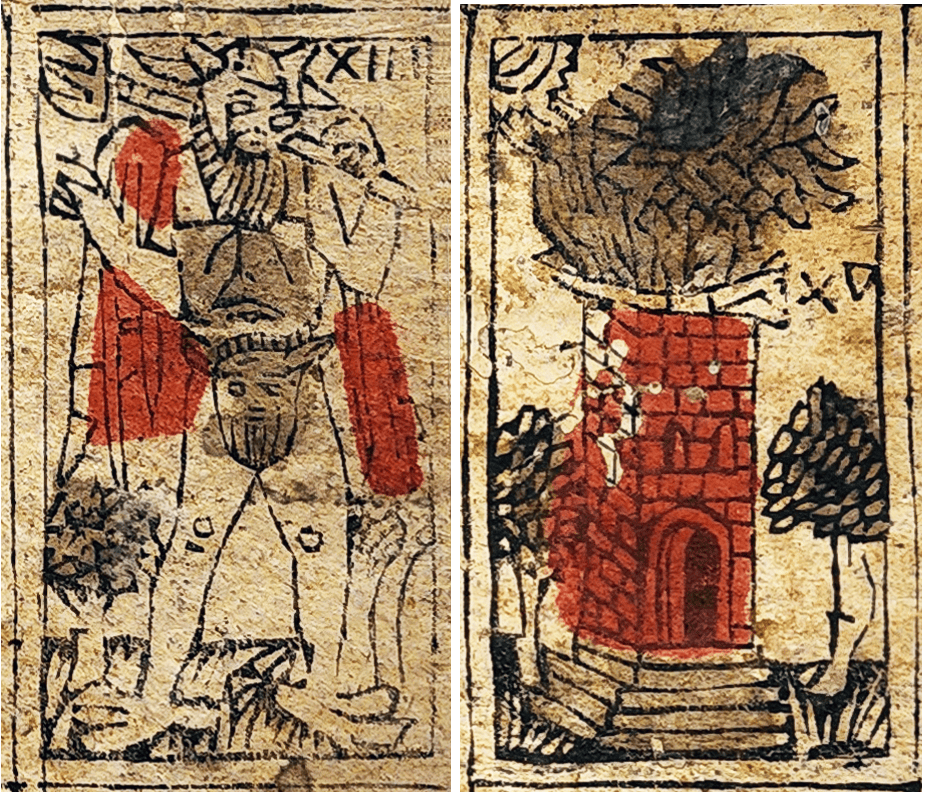
The deck with the most existing trumps is the Visconti Sforza from 1456, possibly created for the wedding of Filippo’s daughter Bianco Visconti (1425-1468) to his heir Francesco Sforza (1401-1466). It contains the Fool and all of the standard trumps except the Devil and the Tower. Many people assume that these two trumps are missing but there is no evidence of the existence of these cards in any of the fifteen Visconti decks. It is known that in the Renaissance some people had a habit of scratching images of the Devil to encourage good luck, and this may explain why the Devil cards are missing. They may have eventually been so damaged that they were discarded, But what about the Tower card?
Another fact that needs to be accounted for is that six cards were created nine years later in 1465 by another artist, possibly Franco Dei Russi (1453-1482). The cards are Strength, Temperance, the Star, the Moon, the Sun, and the World. It is assumed, again, that these cards were damaged and then replaced, but there is no evidence for this. They may have been added to the deck, and when some of these cards appear in the other Milanese fragmented decks, they are obviously copied from the 1465 cards at a later date. The oldest written evidence of a list of the twenty-one standard trumps is a written list called the Steele Sermon dated between 1480 and 1500. The oldest visual evidence are uncut sheets of printed woodcut Tarot cards from Ferrara or Venice that are numbered and were printed between 1465 and 1540, also the uncut sheet of trumps from Florence known as the Rosenwald Tarot, dated c.1500, and the Hand Painted Tower card in the so-called Charles VI deck from Florence, dated c.1480. All of these examples are dated later than the Milanese cards.
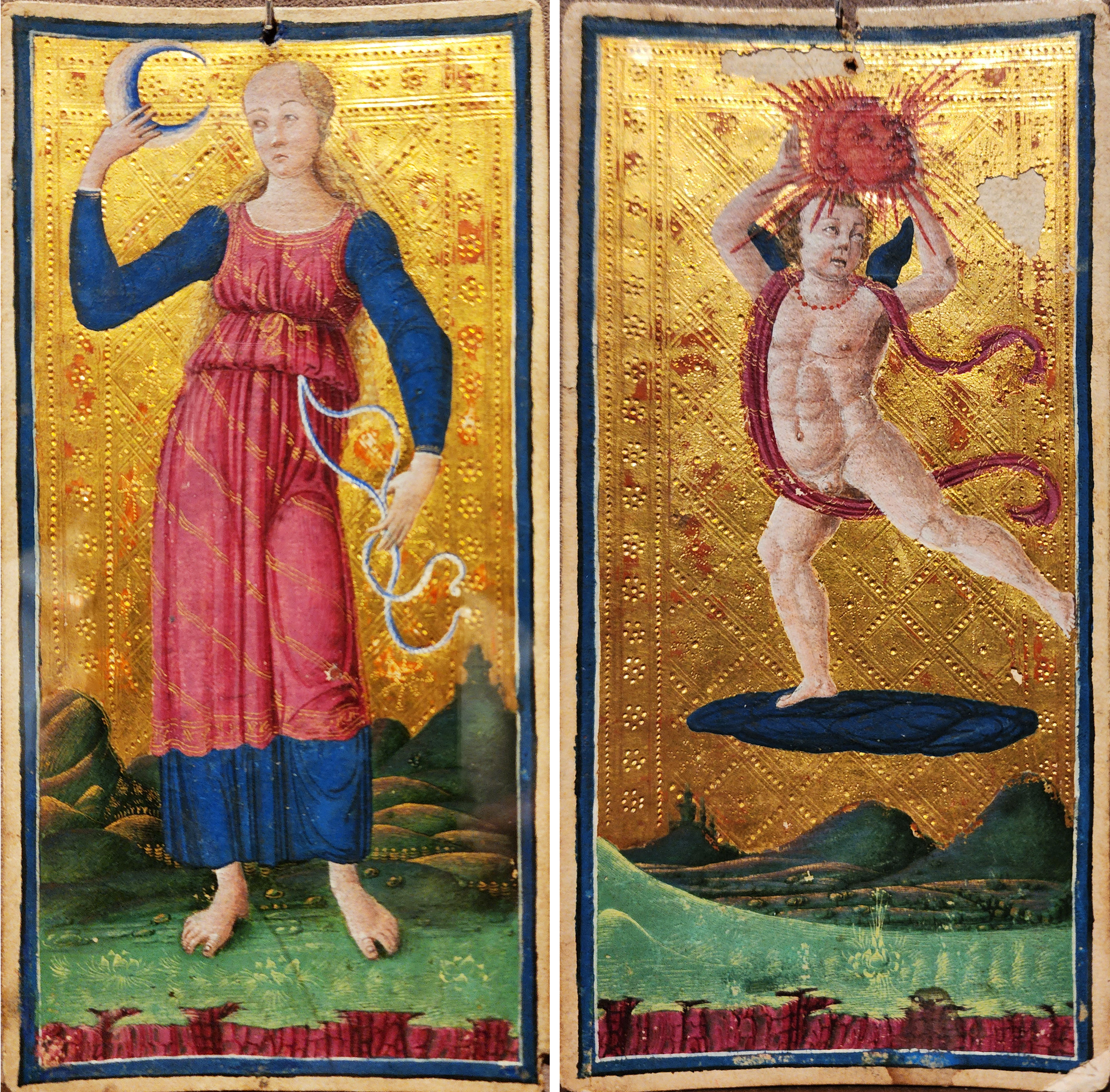
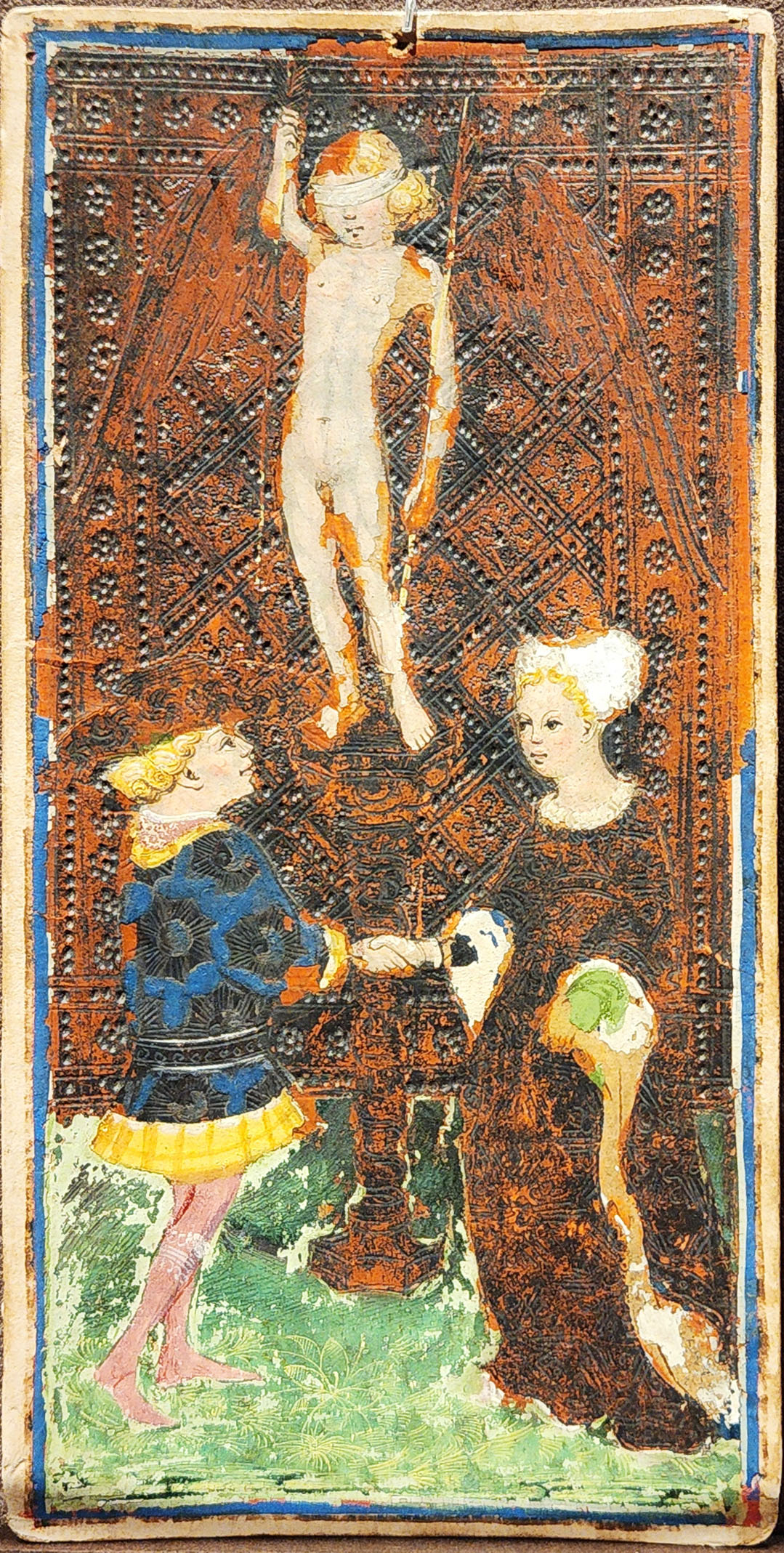
The twenty-one trumps in the complete standard Tarot deck can be divided into three groups of seven cards that each have a clear theme. The themes correspond to the three parts for the soul expressed in Platonic Philosophy: the Soul of Eros (desire), the soul of Thymos, (will and self-discipline), and the soul of Logos (reason).
In the Milan order the first group of seven depicts the worldly Magician or Juggler and two pairs of couples that are all trumped by Eros on the Lovers card then the Chariot with its warrior charioteer takes us into the soul of Thymos. The next seven contain three of the cardinal virtues, as well as images of time (the Hermit), fate (the Wheel of Fortune), suffering (the Hanged Traitor), and Death. All of these trumps are consistent with the Thymos theme which has to do with facing hardships and developing virtue.
The last seven trumps, now that the set is complete, illustrate the Book of Revelation the last book of the Bible in which the world is destroyed in the Apocalypse. In Revelation, St. Michael imprisons the Devil in the bottomless pit, and fire falls from the sky as in the Tower card. Later, the “Woman clothed in the Sun” stands on the Moon with Stars above her head, the dead are called to life by trumpeting angels for the last Judgment, and in the last section, the New Jerusalem descends to earth symbolizing that peace will rein in the World for a thousand years.
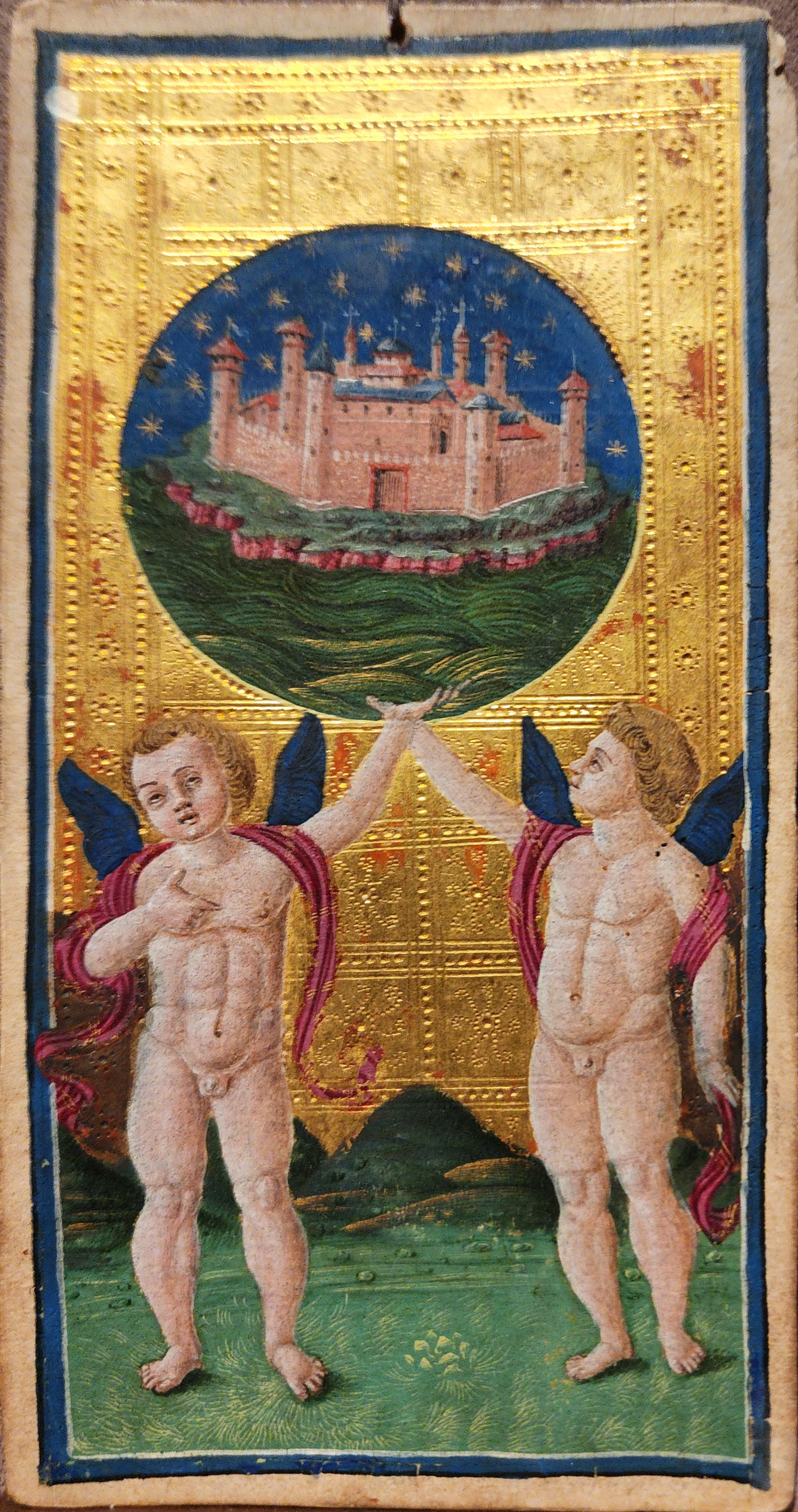
Note that a World card with two angles holding up a circle containing the holy city or the New Jerusalem appears for the first time in the Visconti Sforza Tarot. This is one of the six cards that was possibly created by Franco Dei Russi in 1465, nine years after the original set. The other five include the Star, the Moon, and the Sun. Considering that there were no Devil or Tower cards, the only card that existed for the last set of seven in the original 1456 deck was the Judgment card. The argument that the last seven cards illustrating the Apocalypse only appeared near the end of the 15th century is strengthened by the fact that, at the time, many people believed that the Apocalypse would happen in the year 1500. Albrecht Dürer (1471-1528) capitalized on this belief in 1498 by creating a set of fifteen woodcuts illustrating the Apocalypse. It sold all over Europe and became one the most successful projects he created.
In 1499 King Louis XII of France invaded Milan and claimed the region as part of France. During this occupation, the Tarot was introduced to France. After 1500, when the Apocalypse did not happen, artists In France were free to reinterpret the theme of the final trump as well as other cards. By the 1600s, the Tarot of Marseille was created.
