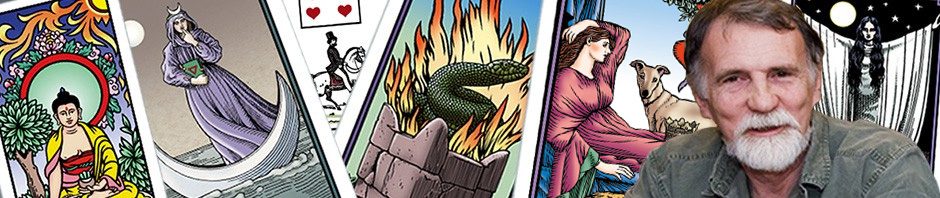

Robert M. Place is the designer and illustrator of over twenty Tarot decks, an acclaimed author, a regular lecturer at the Metropolitan Museum of Art, and he has taught throughout the US and on five of the seven continents.

Alchemy and the Tarot:
Personal Transformation with the new Alchemical Tarot Reimagined
a Workshop with Robert M. Place

Saturday January 30th 2027 – from 2 PM to 4:30 PM
Upstairs at the Inquiring Mind Bookstore
On the corner of Main and Partition Streets,
Saugerties, NY
$65 per student – contact Robert M. Place to sign up, at:
alchemicaltarot@aol.com
follow this link for directions:
Workshop Directions

In the summer of 1987, I was reading a book on alchemy when I became fascinated by an illustration representing the Philosopher’s Stone, the magical catalyst whose creation is the goal of the alchemical Great Work or Magnum Opus. In a flash of insight I realized that the image was symbolically interchangeable with the Tarot’s World card and that all of the Tarot trumps describe the alchemical Opus. This insight led to years of research, and to the creation to one of the most beautiful and meaningful modern Tarot decks, The Alchemical Tarot.
The Fool and trumps in The Alchemical Tarot each relate to an alchemical material or process, which is part of the Great Work or Opus that leads to the creation of the Philosopher’s Stone, a mystical catalyst that transforms what it touches to its highest form. It can cure any illness, turn lead into gold, and turn an ordinary person into an enlightened sage. Now after 39 years, in an effort to incorporate all that I have learned working with the deck over that time, I have redesigned the deck, and this workshop is designed to incorporate those insights.
We will discuss the history and symbolism of alchemy, see how this symbolism relates to the Tarot’s Fool and 21 trumps, and learn how they capture the alchemical Opus, as expressed in The Alchemical Tarot. We will learn how the Tarot can be used as a psychological tool for using transformative spreads designed to internalize the symbolism and bring forth a personal transformation. Instead of using the Tarot to predict the future, I believe that the best use for the deck is as a tool that connects us with inner wisdom and helps us to make better decision that will improve our lives.
Students will need an Alchemical Tarot Reimagined deck,
or any previous edition of The Alchemical Tarot.
New: The Alchemical Tarot Reimagined 7th Edition
Alchemy and the Tarot: Part Two
Personal Transformation with the Alchemical Tarot Reimagined
A Workshop with Robert M. Place

Sunday, February 7, 2027 – from 2 PM to 4:30 PM
Upstairs at the Inquiring Mind Bookstore
On the corner of Main and Partition Streets,
Saugerties, NY
$65 per student – contact Robert M. Place to sign up, at:
alchemicaltarot@aol.com
Follow this link for directions:
Workshop Directions
Continuing from Alchemy and the Tarot Part One, we will discuss the history and symbolism of the minor suits in The Alchemical Tarot We will learn how alchemical numerical symbolism is expressed in the pips of the minor suits, how the four minor suits relate to the alchemical four elements, and how the four elements express the four functions of consciousness in Jungian Psychology. And how to use the entire deck for insightful, transformative readings.follow this link for directions:
Students will need an Alchemical Tarot Reimagined deck, or any previous edition of The Alchemical Tarot.
New: The Alchemical Tarot Reimagined 7th Edition
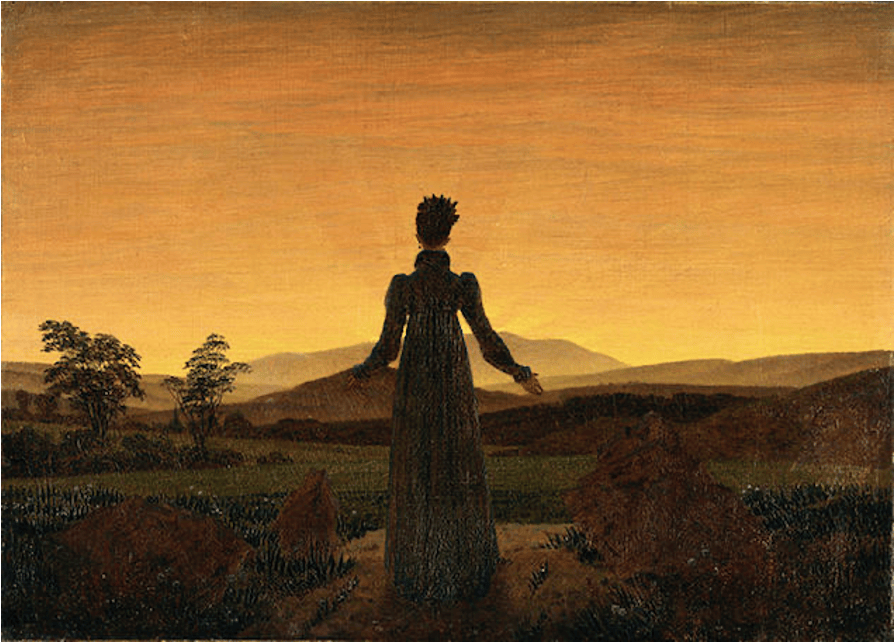
Alchemy, Romantic Art and the Occult Tarot
A Power Point Lecture With Robert M Place
Sunday, February 14, 2027
Upstairs at the Inquiring Mind Bookstore
On the corner of Main and Partition Streets, Saugerties, NY
$65 per student – contact Robert M. Place to sign up, at:
alchemicaltarot@aol.com

Follow this link for directions:
Workshop Directions
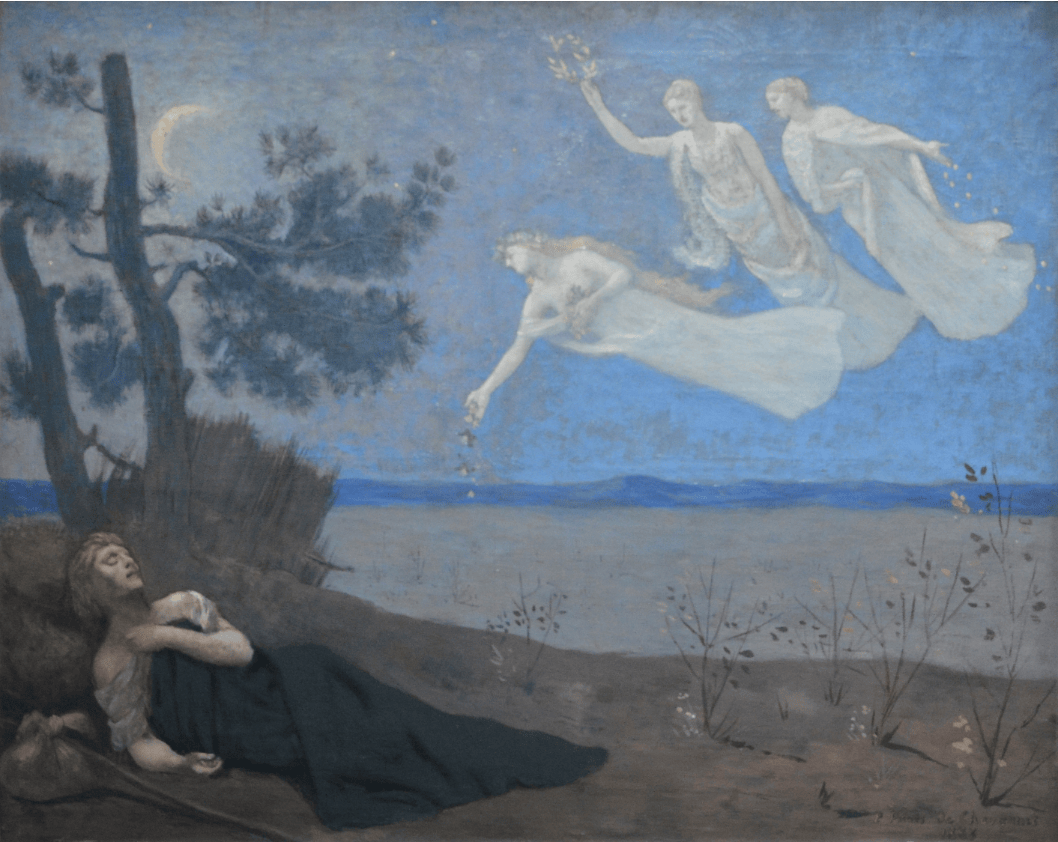
Alchemy and Hermeticism flourished in Europe until the end of the Renaissance and then gradually faded into obscurity during the 18th century as a result of its incompatibility with the empirical, materialistic, scientific character of the “Age of Enlightenment.” As alchemy was falling into obscurity, the last alchemists of the classical period directly inspired the first Romantic artists. Romanticism rejected the muffling, rational approach of the Enlightenment and was naturally allied with alchemical and Hermetic themes and symbols.
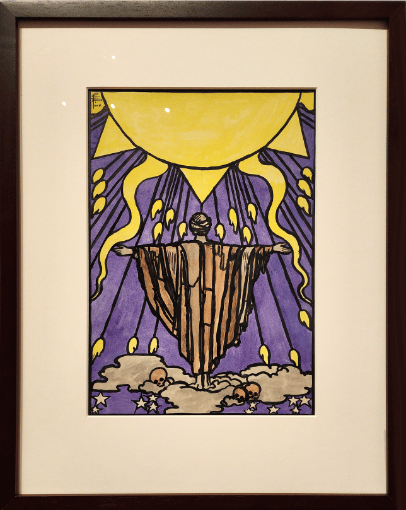
Romanticism is an artistic, movement that originated in Western Europe towards the end of the 18th century. In most areas It was at its peak from 1790 to 1890, but it can be seen as an ongoing influence on the arts into the 21st century. In the broadest sense it may include the Pre-Raphaelites in England, The Hudson River School in the United States, the Symbolists in late 19th century Europe, and the Surrealists of the 20th century. Romanticism was characterized by its emphasis on emotion and individualism as well as glorification of nature and the past, preferring the medieval rather than the classical. It was partly a reaction to the Industrial Revolution and the Age of Enlightenment, and the scientific rationalization of nature. But we will look at how it evolved from alchemy and Hermetic philosophy. And how it influenced the artists that created the first occult Tarot decks. In fact, Etteilla, the designer of the first occult Tarot, is considered the last alchemist of the classical period. This lecture will delve deeply into the philosophy preserved in the Tarot.


The Tarot of the Sevenfold Mystery
Working with the Seven Soul Centers and Psychoactive Space
With Robert M. Place, designer of The Tarot of the Sevenfold Mystery
A Four-day workshop at Omega Institute, Rhinebeck, NY
October 12 through 15, 2027
More information to come
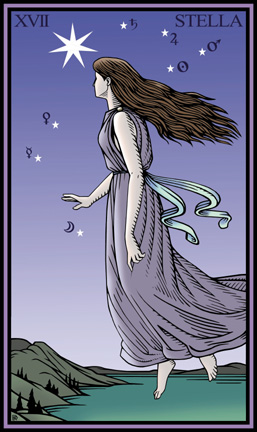
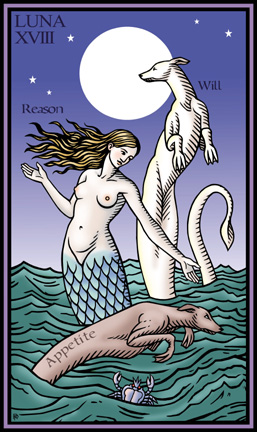
The Tarot of the Sevenfold Mystery is designed for working with the seven soul centers of Western philosophy. The theory of the seven psychic centers or soul centers found in the human body, commonly called the Chakras, is thought to originate in India. However, the oldest writings in India that describe it date from the 2nd century CE. In the West, we can find similar ideas in The Egyptian Book of the Dead. In the 6th century BCE, the Greek philosopher, Pythagoras—the first man to call himself a philosopher—used the seven notes of his musical scale to bring the soul centers of his patients into harmony and health and realized that these seven centers figured in our spiritual development as well. In the 4thcentury BC, Plato ordered them in a hierarchy and described how the cardinal virtues brought each of these soul levels into balance and allowed the purified soul to ascend to greater and greater wisdom. This Platonic system was Christianized by the founding fathers of the Church and became the bases for the lists of the seven virtues and seven vices. When this system is reexamined in light of its history, it is apparent that it is a Western system of Yoga and a path to enlightenment.
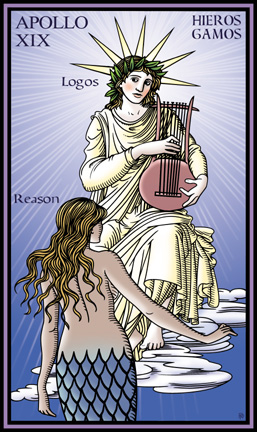
This workshop will introduce us to the symbolism of The Tarot of the Sevenfold Mystery and its relation to the history of the Tarot. We will learn my basic three-card spread for reading the cards. Building off of that foundation, we will proceed to my most advanced Tarot reading in which the cards are used to illustrate the condition of the querent’s soul centers and to make improvements in the flow of energy in each center. When this is accomplished ,improvements in health, prosperity, and wellbeing follow.
We will explore the history of the Western system of soul centers, practice a guided meditation designed to create greater awareness of the centers and purify the soul, and learn the how to perform the Soul Center Tarot reading. In this class we will also use techniques developed by David Grove, the New Zealand therapist and creator of clean Language therapy. We will use Grove’s techniques to turn the Tarot layout into psychoactive space, use the cards to enter our psyches, and uncover the healing symbols that arise. With this reading we will interact on a deeper unconscious level with our cards and turn the reading space into inner space and a source of wellbeing.
The students will need a copy of
The Tarot of the Sevenfold Mystery by Robert M. Place
The Tarot of the Sevenfold Mystery: 2nd Edition
Tarot at the Met
is filled
Tuesday, November 24, 2026
2:00 to 4:00 pm
with Albrecht Dürer’s influence on
the Tarot Trumps

I will be bringing 12 people to the print room
at the Metropolitan Museum of Art in New York
from 2PM to 4PM

“I attended this in October and I’m still thinking about what I saw and learned. What an opportunity!!”
………………………………………………………………Kathryn Rutz
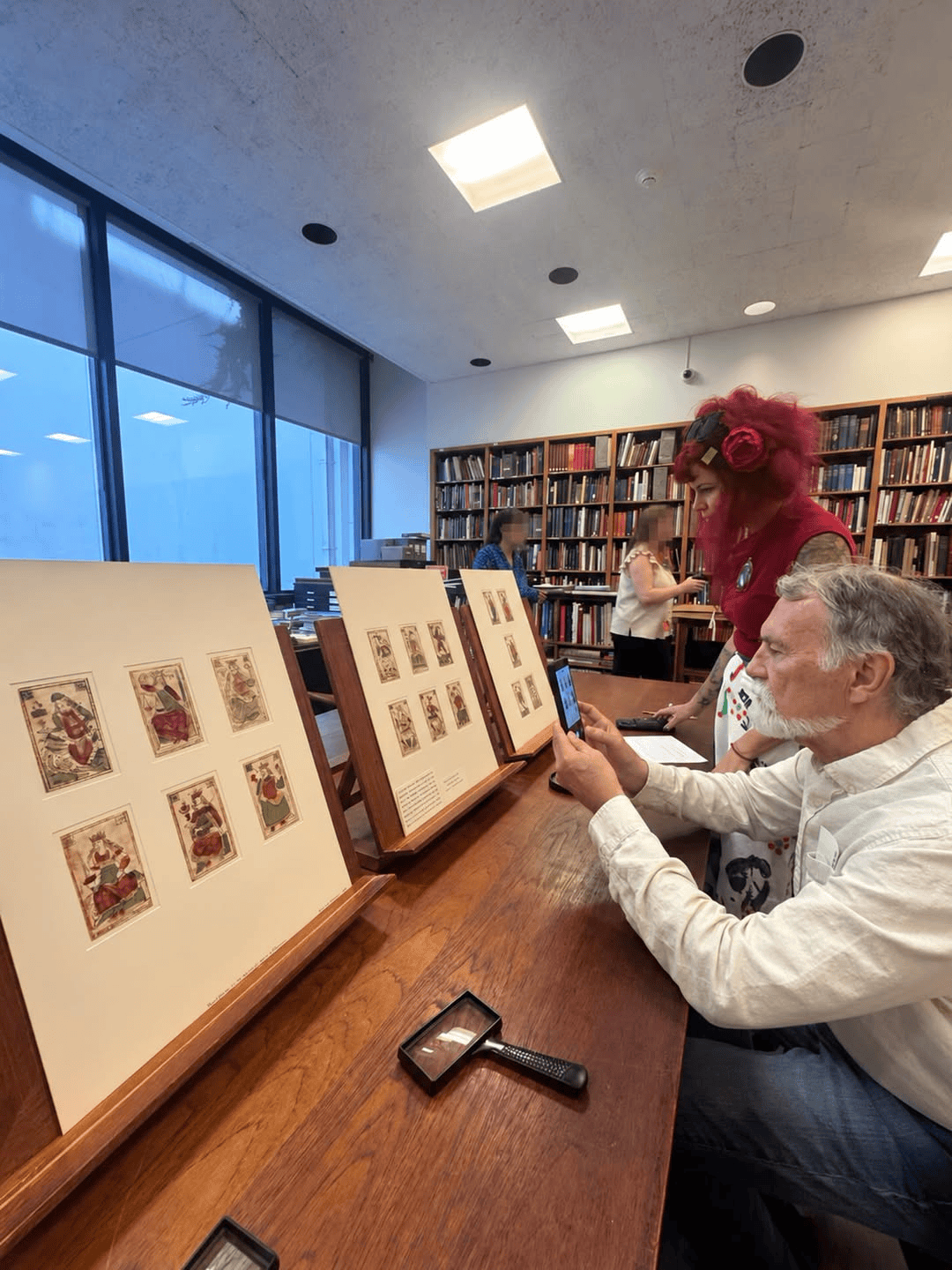
I will once again take a small group of people into the back rooms of the Metropolitan Museum to look at the museum’s collection of historic playing cards, Tarot, Minchiate, and divination cards, ranging from the earliest woodcut Tarocchi, printed in 15th century Italy, to rare 19th century decks. All accompanied by my talk on the history and symbolism of the cards. We will also see one of the oldest and richly illustrated books on divination with cards, Le Sorti, published in Venice in 1540, and the Triompho di Fortuna, an earlier book on divination (1527) that possibly influenced Le Sorti.
As an added treat, This year we will be looking at some original woodcuts and engravings by Albrecht Dürer that relate to the Tarot trumps. Dürer was the most popular print artist in Europe in the late15th century and early 16th century, the same period in which the Tarot images were being developed. Many of his themes seem to have a direct connection with the Tarot of Marseille trumps. We will be viewing a 1760 copy of the Conver Tarot of Marseille in connection with these prints.

The afternoon at the Met is $100 per person, prepaid. Each participant is also responsible for obtaining a ticket for entrance into the museum for the day. There is only room for 12 people at this event so don’t delay; it will fill up quickly. I will be handling this event myself; so, all arrangement must be made through me.

“We traveled to NYC to attend one of Robert’s print room visits and it was extraordinary!”………………………………………….Lisabeth Gutierrez Bennett
To register contact me at:
alchemicaltarot@aol.com

The following are recorded classes available
through Divine Lives
The Recorded
Egyptomania and the First Occult Tarot
with. Robert M. Place
The recording of this class can be purchased from
Divine Lives through this link:
https://www.divinelives.com/offers/KwQ3pjWi/checkout
Or here for the payment plan:
https://www.divinelives.com/offers/Do8tQJq6/checkout

Four two-hour classes with Robert M. Place
Before Aleister Crowley, before Arthur Edward Waite and Pamela Colman Smith, before the Golden Dawn, before Papus, Eliphas Lévi, and Etteilla, the first author to describe an occult version of the Tarot was Louis-Raphaël-Lucrèce de Fayolle, comte de Mellet, writing in Antoine Court de Gébelin’s, 1781, eighth volume of his monumental encyclopedia, Monde primitif.
Although he believed that the Tarot originated in ancient Egypt, the comte de Mellet associated the Tarot’s trumps with the Classical Ages of Man: the Age of Gold, the Age of Silver, and the Age of Iron. He also correlated the trumps with the letters in the Hebrew alphabet, he described the minor suits in detail, and he provided the earliest discussion of a divination technique for the Tarot. These facts inspired me to create a complete Tarot deck based on de Mellet’s descriptions: The First Occult Tarot.

In this class, we will cover the history of the phenomenon known as Egyptomania and come to understand why both de Gébelin and de Mellet believed that Egypt was the source of the Tarot’s mystical trumps. We will examine the meaning and details of every trump and minor suit card in The First Occult Tarot; and we will learn de Mellet’s unique technique for reading the cards, which treats the trumps and the minor suits as two separate decks.

In this two-hour class, we will cover the history of the phenomenon known as Egyptomania and come to understand why both of the first occultists to discuss the Tarot, Antoine Court de Gébelin and comte de Mellet, believed that Egypt was the source of the Tarot’s mystical trumps. Although it is often said that these occultists were inspired by the enchantment with ancient Egypt called Egyptomania, technically this term refers to the fad for things Egyptian that stemmed from Napolean’s invasion of Egypt seventeen years later and his men’s discovery of the Rosetta Stone in 1799. We will learn, however, that this fascination with ancient Egypt has been a constant source of inspiration for European culture, beginning in ancient Greece and continuing into the Latin world when the cult of Isis spread through the Roman Empire.

The Recorded
The Origin and Evolution
of the Tarot Deck
with. Robert M. Place

The recording of this class can be purchased from
Divine Lives through this link:
https://www.divinelives.com/offers/u9fUSu2f/checkout
I have found that when I am reading Tarot cards they work best when I have made friends with the figures on the cards, so that the images speak to me. To make friends, I have learned everything I can about their history and the culture that they were part of. I want to know what the artists who created the cards were thinking.
19th century occultists, such as Eliphas Levi, Paul Christian, and Papus, considered the Tarot an indispensable component of their magical tradition, and to give the deck an appropriately impressive pedigree, invented several imaginative versions of the history of the cards. Most often asserting that it originated in ancient Egypt or other ancient cultures. These spurious origins of the Tarot became such an accepted part of Tarot literature that they were often reported as fact. The Tarot, however, was a creation of Renaissance artists in northern Italy and these occult fantasies can block us from a true appreciation of the mystical heritage illustrated in the cards.
In this lecture I examine the known facts and existing examples of cards. We follow playing cards from their creation in 10th century China to their introduction in western Europe in the 14th century. We learn how, in 15th century Italy, the addition of a trump suit to the existing deck gave birth to the Tarot, and how the Italians passed the Tarot onto France. We discuss the symbolism of early decks and how the cards expressed Hermetic philosophy. We look at the earliest evidence of the Tarot’s use in divination. And we end with a discussion of the occult theories that led to the creation of the Waite Smith Tarot and the modern fascination with the deck. I feel that this class and the following one on symbolism, are an important foundation for all ongoing classes that I will be teaching, and recordings will be available indefinitely.

The Recorded
Symbolism of the Tarot Trumps: Through the Eyes of the Artists,
with Robert M. Place

The recording of this class can be purchased from Divine Lives through this link:
https://www.divinelives.com/tarot_symbolism
“I can’t think of a better person to teach what the tarot images would have meant to people at the time they were created.”………. Mary K. Greer

I have found that when I am reading Tarot cards they work best when I have made friends with the figures on the cards, so that the images speak to me. I feel that this understanding is essential when practicing divination. To make friends with the cards I want to I understand the symbols on the cards as the artists who first created them intended, and to appreciate the profound philosophy that is captured in these images.
Beside creating spurious histories for the Tarot, many occultists created systems of association for the cards, relating them to Hebrew letters, planets, astrological signs, and obscure sets of esoteric meanings. At their worst, these associations became a complex set of secret symbols, or a secret code, that has nothing to do with the artwork that is depicted on the cards. All known facts tell us that the Tarot was created by Renaissance artists in the 1400s, and we can easily see that their illustrations relate to other works for art from this period. By examining this history and comparing the Tarot images to other works of art from same centuries in which the cards were evolving, we can learn to see the Tarot trumps as the artists who created them would have seen them.

In this Three-part class we do just that. We look at historic examples of cards and related Renaissance art. We will also examine the earliest written discussions of the symbolism. And we will learn to interpret the Tarot’s imagery as meaningful works of art, with a history and a relation to mystical philosophy. I feel that this class is an important foundation for all ongoing classes that I will be teaching, and recordings will be available indefinitely.


Three two- hour classes
In part one, we will discuss the structure of the Tarot Trumps in relation to the Renaissance Triumphal parade. We will learn that the Trumps consist of three groups of seven cards, each of which relate to one of the three parts of the Platonic soul. And we will compare the Fool and the first seven trumps to related works of art.
In part two, we will continue relating the remaining trumps to Renaissance art, which will place them in historic context, and illustrate their relationship to philosophical concepts that have been part of Western culture for thousands of years.
In part three, we will examine the earliest written interpretations of the Tarot’s trumps and minor suits, to appreciate how people who lived closer to the creation of the first cards saw them.
Beijing, China
My Chinese workshops are now being conducted on Zoom.
and in Spring, 2027, live in Kyoto, Japan
You can contact Giselle Gao for details:
giselleg@foxmail.com

A Brief Bio

Robert M. Place is the designer and illustrator of over twenty Tarot and oracle decks: including the internationally acclaimed and award-winning Alchemical Tarot, The Angels Tarot, The Marziano Tarot, the award-winning The Tarot of the Saints, The Buddha Tarot, The Vampire Tarot, The Tarot of the Sevenfold Mystery, The Tarot of the Alchemical Magnum Opus, The Alchemical Tarot of Marseille, The Hermes Playing Card Oracle, An Ukiyo-e Lenormand (based on Japanese culture), The Raziel Tarot and The Burning Serpent Oracle (for both of which he collaborated with Tarot diva Rachel Pollack). Besides writing books to accompany his decks, he is the author of The Tarot: History, Symbolism, and Divination, which Booklist has said, “may be the best book ever written on that deck of cards decorated with mysterious images called the Tarot.” He is the author of Astrology and Divination, Magic and Alchemy, Shamanism, Alchemy and the Tarot, and The Tarot, Magic, Alchemy, Hermeticism, and Neoplatonism. He is the curator of “The Fools’ Journey” and the author of the catalog for this exhibition of Tarot art that originated at the LA Craft and Folk-Art Museum, in 2010. He was the guest of honor at the opening of the Tarot Museum in Riola, Italy, in 2007. His Facsimile Historic Italian Tarot is included in the collection of the Metropolitan Museum of Art, where he recurrently lectures on their card collection. He and his work have appeared on the BBC, A&E, the Discovery Channel, and the Learning Channel. He has taught and lectured throughout the US and on five of the seven continents. His newest work, The Fist Occult Tarot, is a deck and book based on the descriptions written in 1781 by the come de Mellet, the first occult author to describe a Tarot deck.
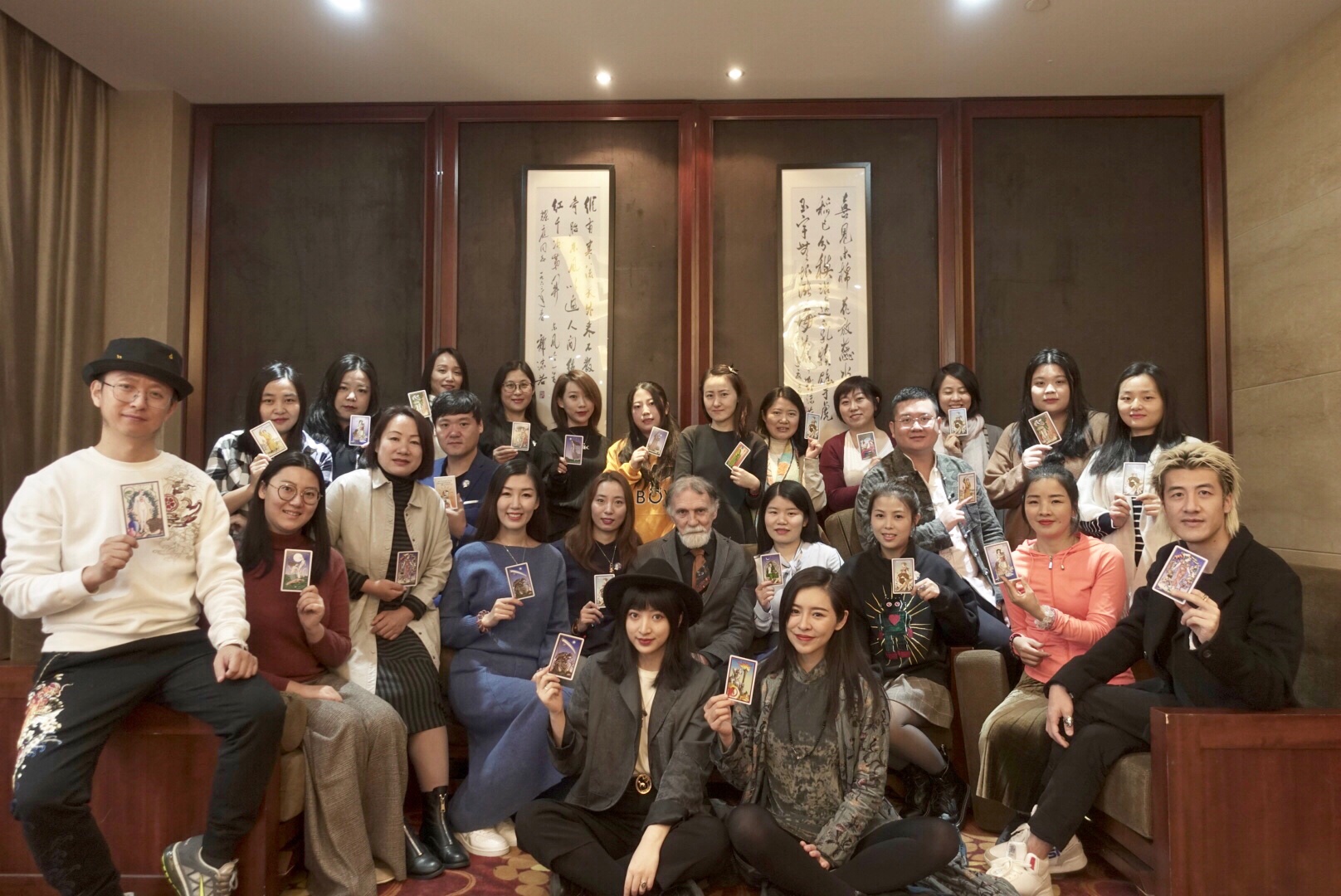
These photos are from my classes Beijing, 2018and in Hangzhou, China in 2019


To receive The Restored Temple of Hermes, my free newsletter e-mailed every three months or so, with links to my latest articles and news about up-coming lectures, workshops, and publications, send an e-mail to me with The Restored Temple of Hermes in the subject line. Also, please let me know what state or country you live in.
alchemicaltarot@aol.com


The opening of the Fool’s Journey, an exhibition on the art and history of the Tarot at the Los Angles Craft and Folk Art Museum. I’m 2010
Hi Robert,
I took a workshop with you just after the first printing of the first deck and book, both of which I still have, it must have been 1995 or 1996. The workshop was in Northern California, maybe Berkeley or Sonoma County? Your class was important to me and I continue working with the Tarot. My name was Sidra then; I have been living in Berkeley, CA since 1984.
I plan to buy your “Alchemy and Tarot” book, the Renewed 4th Edition deck and the new Marziano deck through Indiegogo. Just wanted to check in with you after all these years. I am very glad to see your work has developed so deeply and that you remain a productive artist and writer. Cudos to you!
My new name came through mystical channels, using the Kabalarians of Canada’s system of analysis and resonance. I legally changed it on December 19, 2003. It was part of my alchemical transformation, helping me move gradually from lead into gold, or more balanced, so to speak.
Thank you for what you have contributed to world knowledge, healing and beauty.
Sincerely,
Arden Kamille Varnel
The class was August 11, 1996, and my name was Sidara, as you inscribed the book to me on that date.
Will you ever come to Saint Louis?
If I am invited and someone pays for my time.
GOOD ANSWER Robert! This is always my response when people ask “When are you going to come here and do a workshop, etc.”
Do you teach classes at The Open Center New York often? Just curious because I am interested in the class but can’t make it in this May.
Yes, I teach there there or four times a year.
Hi please do u know the next class /september or so 2019!! I too will miss mayb& very much look toward the possibility of a class.. Thank u!!!
I updated the dates
Do you teach online
I have in the past. Do have any suggestion on how to set it up?
Well, if I got your reply right (English is not my first language) Skype might work, It also depends if you are able to teach individually or groups.
It is better to email me at alchemicaltarot@aol.com
Hi Robert. Do you ever come to Philadelphia?
I have in the past, but I don’t have anything planed for now.
I wish I could attend, unfortunately I can’t. But I wanted to take an opportunity to thank you. As well as Rachel Pollack- I truly believe had it not been for my “mistakenly” ordering Seventy Eight Degrees of Wisdom- I may not be where I am today. (& I don’t believe in accidents… so my “mistake” was meant to be).
Reading that book, saved my life. It may sound extreme… but it absolutely did.
I was raised Jewish, and I always from the time I was extremely young, was extremely drawn to things such as crystals and tarot, this book was the first of its kind, that helped me explain to my family who didn’t understand the spiritual path that led me to where I am today… and help them understand many of my connections- andddd the fact that it involved the Kabbalah of course didn’t hurt!!!! When I saw the deck that you created with Rachel Pollack, I knew it was a must have in my collection. But I am a single mom, putting one son thru college, and another son who just got braces (which is like a car payment!!!) I had to prioritize, and I knew when the time was right I would get these gorgeous, amazing, magickal cards. I truly hope that you both decide to continue further with the Raziel Tarot, adding your spin on the minor Arcana. That would be absolutely perfect. I’m unsure as of now which cards are kind of connecting with just the Major Arcana, it’s almost like my connection with this deck is extremely different then my others. And I fully believe this is my soul deck. I just wanted to Thank you (& Rachel as well) for all the insight, knowledge, skill, and education you have continued to bless us with. I for one do not take it for granted and I am completely grateful, and feel unbelievably blessed to be on this new journey (once again! BUT- this time, older, wiser & much more opened to the many things that tarot can help us with in our personal lives, struggles, triumphs, hardships etc. tarot is a wonderful tool for self help, and finding ourselves within, learning about ourselves, (even the things we don’t often want to face. But must in order to work on them). I believe tarot is excellent is an excellent way of us connecting with our higher power, and learning self awareness, self acceptance, and most of all self love. From the purest place of my heart. I thank you for all you do for the tarot community. But especially for me. With deepest gratitude of course- TO LIFE! L’Chaim! לחיים (I am not far from the Philadelphia area. I reside just a couple of minutes from Atlantic City NJ. I’d love to be able to catch one of your events)
Hi! Is there a way to buy the recorded course : A Visual History of Hermetic Philosophy from Ancient Egypt to 19th Century Symbolists ? Thank you very much
Robert, I am very interested in your contact info or for info to contact your booking agent? I was listening to you on Gordon Whites show, and I think you would have a blast being a guest speaker on our show?
You can privately email if you’d like. Thank you for your time, and most importantly- your work.
Hello Robert. I am also born in 1947 – May 11. I live in Rhinebeck NY and I am wondering if by any chance you do tarot readings for people or if you are doing any workshops or presentations in the Hudson Valley area.
I can’t message you so we decided to attend on October 21st. Four of us will be there to learn and gather for a short time, hopefully.
Eddie